Finding Your Last Spring Freeze Date Across Montana Elevations
A last spring freeze date can look precise on a calendar, yet a garden at one elevation may face a different risk from a nearby garden on a slope or valley floor. The useful date is not always the date from the closest station. Here’s how to compare local records with your site’s elevation and microclimate, then use that information to make more confident planting decisions.
Why elevation changes the freeze-date picture
Elevation matters because air temperature often falls as elevation rises, but it is only one part of the local picture. Two gardens at similar elevations can have different freeze risks because of slope, nearby terrain, exposure to wind, and the way cold air moves across the site. That is why a last spring freeze estimate is best treated as a starting point, not a promise about what will happen in a particular garden.
Cold air tends to settle in low spots when conditions allow it to move downhill and collect. A garden in a valley bottom or enclosed hollow may therefore experience a colder night than a garden on a slope above it. This pattern is not guaranteed: wind, cloud cover, terrain, and other weather conditions can change where cold air settles. Still, it is a reason to look beyond elevation alone when comparing your garden with a weather station.
A slope’s direction and exposure also matter. A sheltered site may avoid some of the chilling effects of wind, while an exposed site may lose heat quickly. A sunny slope can warm earlier during the day, but that daytime warmth does not guarantee protection from a freeze overnight. Nearby buildings, pavement, fences, and dense vegetation can also affect air movement or heat retention around a garden. Their influence is local, so a general map cannot capture every detail.
These differences are especially important when a planting decision depends on avoiding a cold night. A hardy crop may tolerate cool conditions that would injure a warm-season crop or a tender seedling. Even plants in the same bed can face different exposure if one row is near a windbreak and another is open to the sky. Rather than treating the garden as if it has a single, perfect freeze-date prediction, think of the date as a way to frame risk.
Plant hardiness zones do not solve this problem. Those zones describe a different aspect of climate and should not be used as a substitute for spring freeze information. For the distinction, see Why Plant Hardiness Zones Do Not Tell You When to Plant and Hardiness Zones Versus Frost Dates for Annual Vegetables. A zone can help with perennial plant survival, while a spring freeze estimate helps with the timing and risk of seasonal planting.
It also helps to keep the limits of a “last freeze date” in mind. The date is an estimate based on a defined probability, not a fixed appointment with spring. A forecast can still call for a freeze after a date that gardeners use for planning, and a frost can occur in a garden even when a nearby station does not record one. The practical goal is not to find a date that eliminates uncertainty. It is to choose a useful local reference and make a planting plan that can absorb some variation.
How to find a useful station record
Start by looking for weather records from stations near your garden, then compare their locations rather than selecting the closest station automatically. A nearby station may sit at a different elevation, on a different landform, or in a more open or sheltered setting. A station farther away may better resemble your garden’s exposure, though distance still matters because weather patterns can vary across Montana.
If you can find station details, note the station’s elevation and setting. Is it on a valley floor, an open plain, a slope, or near a built-up area? Does the garden share those broad features, or is it notably more exposed or sheltered? The closer the station and garden are in both location and landscape, the more useful the comparison is likely to be. A mismatch does not make the record useless; it simply means you should treat it with more caution.
When available, compare records from more than one nearby station. Look for the pattern they show rather than expecting every station to report the same last freeze. If stations with similar settings point toward a similar planning window, that can provide a stronger starting point than relying on a single record. If the records differ, ask what might explain the difference: elevation, valley position, slope exposure, or distance from your garden.
Check what the reported date represents
A reported last spring freeze date can mean different things depending on how it was calculated. Some estimates use a probability threshold, meaning the date describes the likelihood of a freeze by that point rather than guaranteeing that freezes are over. When comparing dates, check that you understand the probability behind each estimate. If that information is not clear, use the date cautiously and seek clarification from the organization providing the record.
A date based on a lower chance of a later freeze may be more useful for a gardener who is willing to accept more risk. A more conservative estimate may suit a gardener who wants a larger safety margin. Neither choice is universally right. The best fit depends on the crop, the cost of losing plants, whether you can cover them, and how much flexibility you have to delay planting.
Also check what kind of freeze the estimate describes. Air temperature recorded at a station does not always match the temperature at leaf level in a garden. A light frost can damage sensitive foliage even if a nearby station’s reading does not tell the whole story. A sheltered garden may also differ from an exposed station, and the reverse can happen. Records are valuable context, but they cannot account for every garden-level condition.
For a broader approach to comparing local records, see Tracking Spring and Fall Freezes Across Montana Stations. If you are choosing planting dates for particular vegetables, Matching Vegetable Planting Dates to Local Montana Frosts can help connect the local risk picture with crop timing.
Keep a simple local record
Once you have selected a useful station or set of stations, keep a garden notebook or digital record of what happens at your site. Note when a freeze or frost occurs, which parts of the garden are affected, and whether covers or nearby structures make a difference. Record planting outcomes as well: whether seedlings were injured, whether a crop recovered, or whether delaying planting would have helped.
A home thermometer that records minimum temperatures can add useful context if it is placed in a representative spot and used consistently. A reading taken beside a sunny wall or under a dense canopy may not reflect conditions in an open bed. If you are comparing the garden with a station, keep the measurement location consistent so that changes over time are easier to interpret.
Your observations do not replace a station record, but they help you understand how the garden differs from it. Over time, you may notice that one bed is consistently colder, that a low corner holds frost longer, or that a sheltered area warms sooner. Those patterns can help you decide where to place early plantings and which areas to reserve for crops that need more warmth.
Read the landscape around your garden
Before relying on a station estimate, walk the garden and look for features that could increase or reduce freeze risk. Pay particular attention to low areas, open slopes, wind exposure, and nearby structures. The goal is not to assign your yard a new official date. It is to understand how local conditions might shift the risk compared with the broader station record.
A low pocket may collect cold air, especially if there is a clear downhill route into it. Beds in those locations may be more vulnerable to a late freeze than beds on a gently elevated part of the same property. If you do not have a choice about where the garden sits, the observation is still useful: you can plant the more cold-tolerant crops in the riskiest area and keep vulnerable starts closer to shelter.
A slope can have advantages and disadvantages. Cold air may move down and away from some slopes rather than pooling there, while wind exposure can make a slope less forgiving. The direction the slope faces also affects sunlight and daytime warming. Do not assume that every slope is safer than every low spot. Check the actual site, and pay attention to where frost appears after cool, clear nights.
Windbreaks can reduce exposure, but dense barriers may also change air movement. A fence or hedge may create a sheltered pocket on one side and a more exposed area elsewhere. If you have several beds, compare them rather than assuming the entire garden shares the same conditions. A simple site sketch can mark low spots, slopes, shelter, and the beds that have experienced frost damage.
Elevation readings from a map or device can be helpful for comparing places, but avoid treating elevation as a stand-alone answer. The nearest station at a similar elevation may still have a very different landscape position. A station on an exposed ridge and a garden in a sheltered depression do not make a straightforward match simply because the elevation figures are similar. Likewise, a lower station can still offer useful context if its terrain and exposure are more like the garden’s.
The practical way to combine these clues is to make a best-fit comparison:
- Find nearby station records and check the station setting where that information is available.
- Compare the station’s elevation and landform with the garden, not just the distance between them.
- Look for differences in slope, shelter, and cold-air pooling around the beds.
- Use multiple records as context when they show different patterns.
- Treat the final date as a planning reference, then adjust your choices to the crop and the garden’s risk.
For site-specific considerations beyond elevation, see Checking Microclimates Beyond Your Montana Hardiness Zone. If late cold is a regular concern, Adjusting Sowing Dates for Montana Gardens Facing June Frosts and Protecting Montana Seedlings When Late Cold Threatens offer related planning and protection ideas.
Match the date to the crop and the kind of decision
A freeze-date estimate is most useful when you connect it to what you plan to grow. Different crops have different tolerance for cold, and seedlings can be more vulnerable than established plants. The same estimate may be a reasonable planting reference for a cool-season crop but too risky for a tender warm-season start. The date should inform the decision, not make it automatically.
For direct-sown crops, consider whether the seed can germinate in cool soil and whether young growth is likely to withstand a cold spell. For transplants, consider the condition of the plant and whether it has been prepared for outdoor conditions. A plant that has not adjusted to sun, wind, and temperature shifts can struggle even if the overnight temperature does not reach a damaging level. The distinction between direct sowing and starting indoors matters, so Timing Garden Direct Sowing vs Indoor Starts for Montana Climates can help you plan the method as well as the timing.
Some gardeners use a conservative approach for crops that are difficult to replace or slow to recover. Others accept more risk for crops that are inexpensive to reseed or can be protected readily. This is a judgment call, not a single rule. If you plant early, be ready to respond to a forecast by covering vulnerable plants or moving containers to shelter. If you cannot protect the planting, waiting for a more favorable stretch of weather may be the simpler choice.
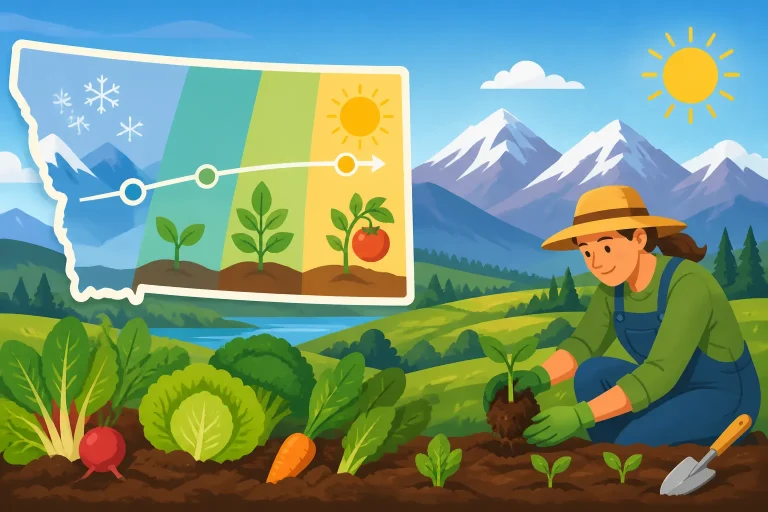
The date can also help organize a sequence of plantings. Cool-season crops may go in while warm-season crops remain protected or wait for better conditions. A mixed garden does not need to be planted all at once. Separating plantings by crop type lets you use the season without forcing every plant to take the same risk. For a broader state-level overview, see When to Plant Vegetables Outdoors Across Montana.
Beets offer a useful example of how crop guidance can differ from the idea of waiting until all freeze risk has passed. According to Montana State University Extension, beets can be planted from 4 weeks before last frost to 8-10weeks before first frost. That crop-specific window shows why the last freeze date should not be treated as a universal starting line for every vegetable. It does not mean every garden or every beet planting will perform the same way; site conditions and the crop’s needs still matter.
A calendar can help you organize these choices, but it should stay flexible. If the garden is colder than the station setting, you may decide to delay tender crops or use protection. If your site is sheltered and your crop tolerates cool conditions, you may be comfortable planting earlier. Keep the local forecast in view, because a date estimate describes a pattern rather than the weather of a particular night.
| Garden situation | What to consider | Practical response |
|---|---|---|
| Low bed where cold air collects | It may be colder than a nearby station on higher ground | Use a more cautious approach for vulnerable starts |
| Exposed slope | Wind and exposure may offset some benefits of the slope | Protect sensitive plants or delay them if conditions look risky |
| Sheltered bed near a structure | Shelter may affect temperature and air movement | Compare this bed with open beds rather than assuming they match |
| Garden similar to the station setting | The station may offer a closer planning reference | Use its estimate alongside the forecast and crop tolerance |
| Records from nearby stations differ | Elevation and landscape position may explain some of the gap | Compare settings and keep a wider margin for vulnerable crops |
For warm-season crops, a late freeze can damage plants that have already been transplanted, so planning should include both the estimated date and the possibility of a forecasted cold night afterward. Hardening and Transplanting Warm-Season Crops in Montana covers the transition from indoor growth to outdoor conditions. For the broader question of freeze risk across different local areas, Montana Seed-Starting and Transplant Schedules by Region can help connect timing decisions with regional variation.
Build a flexible planting plan
The most dependable plan uses a local reference date, a clear sense of the garden’s weak spots, and a backup option for vulnerable plants. You do not need to know the exact temperature every corner of the garden will reach. You do need to know which crops cannot take much cold, which beds are more exposed, and how you will respond if the forecast changes.
Start with the station information that best matches your garden, then mark a conservative window for sensitive crops. Keep separate notes for crops that tolerate cool conditions and crops that need more warmth. This prevents the calendar from turning into a single “plant everything” date. A staggered plan also makes it easier to adjust when a cold spell appears in the forecast.
Use protection only when it is appropriate for the plants and the conditions. Covers can reduce exposure, but they are not a guarantee against every freeze. Make sure covers are secured and arranged so they do not harm plants, and remove or adjust them when conditions change. If you are unsure which protection method suits the crop, consult a reliable gardening reference or local gardening professional.
It is also worth planning where you will place containers and extra seedlings. Containers can be easier to move than in-ground plants, which may provide flexibility when cold weather threatens. For beds, leave yourself access to cover plants without damaging them. A garden that is easy to protect is more adaptable than one where every planting is packed tightly together.
After a freeze, assess the plants before deciding what to remove. Damage can vary by crop and by how exposed the plant was. Some plants may recover, while others may be too injured to continue productively. Keep notes on what happened and what protection was used. Those observations can make future planting decisions more tailored to your own property than a general calendar alone.
A useful plan also has a threshold for changing course. Decide in advance which crops you are willing to plant with some risk, which you will protect, and which you will postpone if a freeze is forecast. That removes some of the pressure from a last-minute decision. It also helps avoid treating a station’s estimate as a guarantee that cold weather cannot return.
Finally, revisit your assumptions each season. Weather patterns and garden conditions can vary, and landscaping changes can alter shelter or airflow. New buildings, removed trees, or a rearranged garden can change how a bed behaves. A simple record of station information, garden observations, planting choices, and results gives you a practical basis for adjustment without expecting a date to predict every local condition.
Frequently Asked Questions
Is the closest weather station always the best one to use?
No. Compare the station’s elevation, landform, and exposure with your garden as well as its distance. A farther station with a more similar setting may provide useful context, while a nearby station in a very different landscape may need more caution.
Does the last spring freeze date mean frost is impossible afterward?
No. A last freeze estimate is a probability-based planning reference, not a guarantee. Keep checking forecasts and account for the crop’s tolerance and the garden’s local conditions.
Should every vegetable wait until after the last freeze?
No. Crop needs vary. Some vegetables can be planted under cooler conditions, while tender crops need more protection from cold. Use crop-specific guidance rather than applying one date to the whole garden.
What if nearby station records do not agree?
Compare their settings and look for differences in elevation, slope, or exposure. Use the records as a range of context rather than forcing them into a single exact date, and make a more cautious plan for vulnerable plants.
Disclaimer
This article is for general informational purposes only and does not constitute professional advice. Laws, prices and regulations vary by location and change over time. Consult a qualified professional for guidance on your specific situation. Montana Gardening Guide is not a government agency and is not affiliated with any university extension, state department of agriculture or other government agency.