Why Plant Hardiness Zones Do Not Tell You When to Plant
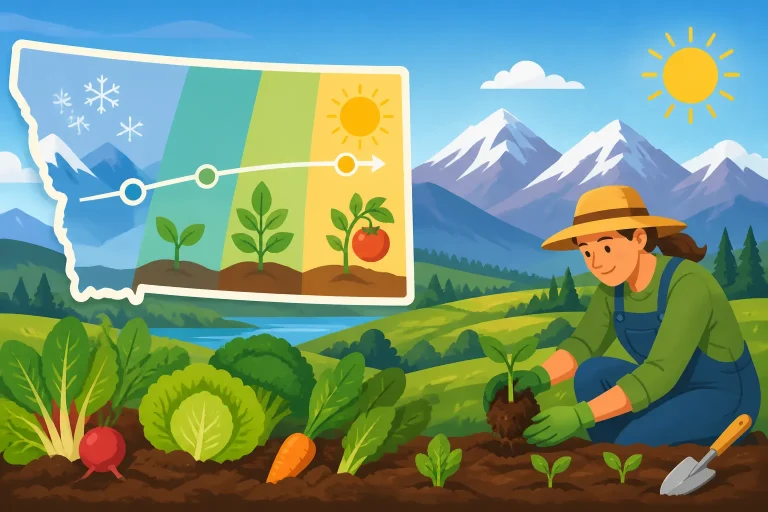
Montana gardeners often look up a hardiness zone, then find that it doesn’t answer the question they actually have: when can a crop go into the ground? Zones describe winter cold, not spring frost, soil warmth, or summer length. Here’s how to use a zone as one planning clue—and combine it with local conditions to choose a more useful planting window.
What a hardiness zone tells you—and what it leaves out
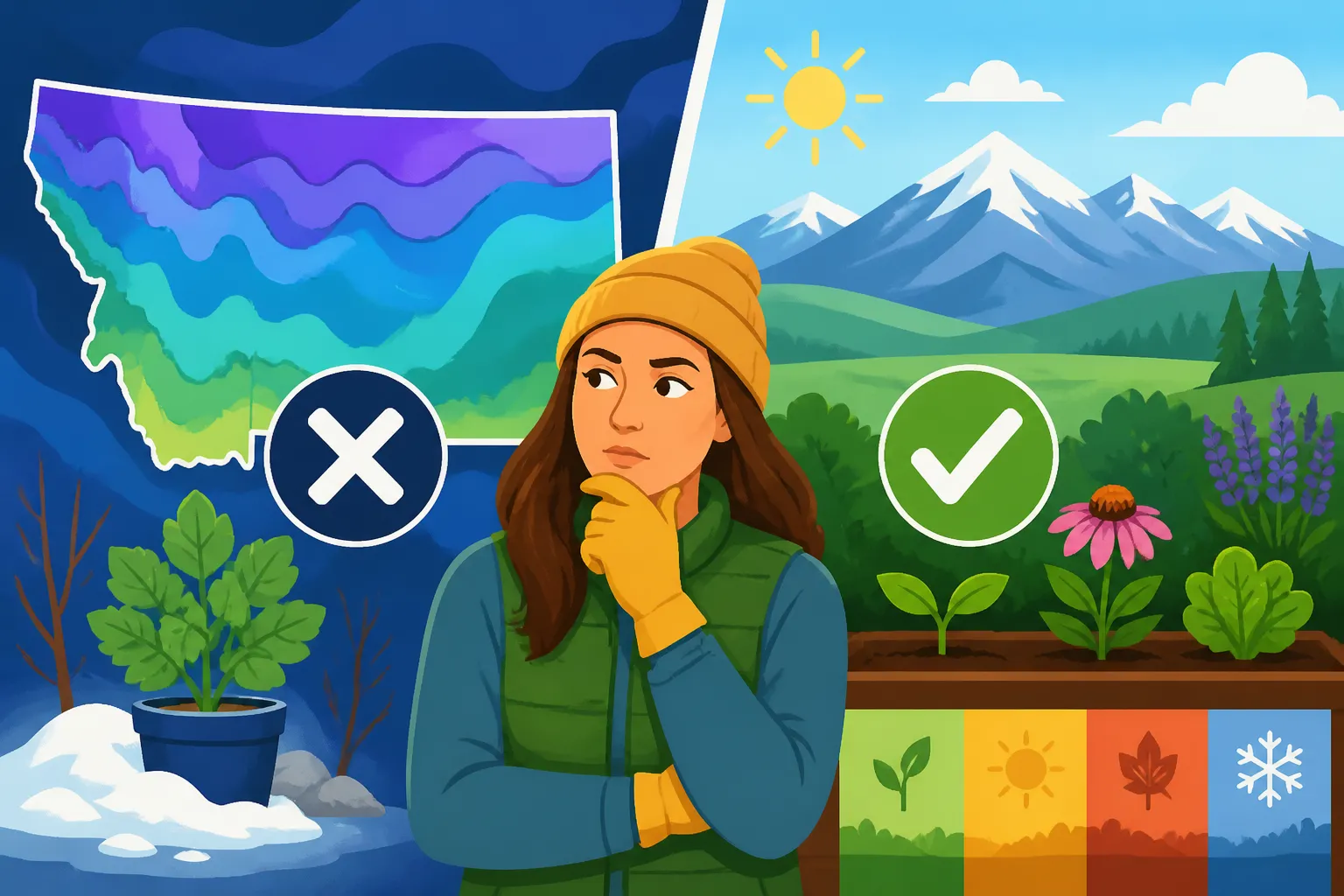
The USDA Plant Hardiness Zone Map groups areas by their average annual extreme minimum winter temperature. A zone can help you judge whether a perennial plant is likely to survive winter outdoors. That makes it useful when choosing trees, shrubs, and other plants that remain in the ground year after year.
It does not tell you when to sow seeds or transplant vegetables in spring. A zone is not a calendar, a frost forecast, or a measure of how quickly a garden bed warms. It also doesn’t tell you how long a particular site stays warm enough for a crop to flower and mature before autumn cold returns.
This distinction matters in Montana, where conditions can change substantially over short distances. Two gardens in the same general area might have different exposure to wind, different elevation, different drainage, and different nighttime temperatures. The same zone can include places that do not share the same planting window.
A hardiness zone is also an average, not a guarantee. It summarizes past extreme winter temperatures; it does not promise that a plant will survive every winter or that a garden will avoid a cold snap in spring. The zone map is useful background information, but it cannot account for every year’s weather or every yard’s conditions. For a closer look at what the map can and cannot say, see Montana Hardiness Zones: Understanding the Updated Map.
For annual vegetables, the mismatch is especially clear. A plant may be able to survive the average winter minimum in a place but still be damaged by a spring freeze while it is young. Or it may tolerate a light frost yet fail to produce a good harvest if the growing season is too short or the soil stays cold too long.
| Question | What helps answer it | What a hardiness zone does not provide |
|---|---|---|
| Can a perennial survive typical winter lows? | The plant’s winter hardiness, site exposure, and local conditions | A guarantee against winter injury |
| Is it safe to plant a frost-sensitive vegetable outside? | Local spring freeze patterns, the crop’s tolerance, and forecast conditions | A safe spring planting date |
| Is the soil warm enough for seeds to germinate? | Soil temperature and moisture at the planting depth | Soil warmth or germination speed |
| Will a warm-season crop mature before fall cold? | The crop’s days to maturity, the usable growing window, and site conditions | The length of a frost-free growing season |
| Will one planting date suit a whole town or valley? | The particular garden’s elevation, slope, exposure, and cold-air flow | The conditions at a specific address |
The takeaway is not to ignore hardiness zones. Use them for the question they address—winter survival—then use other information for spring sowing and transplant decisions. Hardiness Zones Versus Frost Dates for Annual Vegetables explains the distinction for annual crops in more detail.
Why planting windows vary across Montana
A planting calendar is most useful when it reflects the conditions that affect the garden, rather than relying on one statewide date. Montana’s varied terrain, weather, and growing sites make a single date a poor fit for many gardeners.
Elevation and local terrain
Elevation can affect how quickly spring arrives and how long cold conditions persist. A garden in a higher or more exposed location may experience different temperatures from a lower, sheltered site nearby. Valleys and slopes can also behave differently from one another.
Cold air tends to move downhill and collect in low spots. A garden at the bottom of a slope may therefore be more vulnerable to a cold night than a garden higher up, even when the two sites are close together. Hillside gardens may drain cold air more readily, although their exposure to wind can create other stresses.
This means regional guidance is a starting point, not a substitute for watching your own site. A local freeze estimate can help you plan, but it cannot tell you exactly what will happen in a particular bed. Finding Your Last Spring Freeze Date Across Montana Elevations covers how to think about local freeze information and elevation.
Microclimates around a home
A microclimate is a small area with conditions that differ from its surroundings. South-facing walls, fences, paving, and sheltered corners can absorb or hold warmth. North-facing spots, low pockets, and areas exposed to wind may stay cooler or dry out differently.
These differences can shift when a bed becomes workable and how well a crop grows. A sheltered raised bed might warm earlier than a shaded in-ground bed, while a wall that reflects heat could make a location stressful for a cool-season crop later in spring. A protected spot can also give a false sense of security if a clear night still brings freezing temperatures.
Observe several areas of the yard rather than assuming the whole garden has one climate. Note which spots thaw first, where frost lingers, and where wind tends to strike. If you are choosing between planting locations, Checking Microclimates Beyond Your Montana Hardiness Zone can help you compare site conditions.
Year-to-year weather
An average freeze date is a planning aid, not a promise. Spring may progress steadily in one year and be interrupted by cold snaps in another. A warm stretch can tempt a gardener to plant early, but a brief run of mild days does not eliminate the possibility of frost or mean the soil has warmed enough.
The growing season also varies. A late spring can delay planting, while an early autumn freeze can shorten the time a crop has to finish. This is one reason to avoid treating a calendar date as a fixed permission to plant. Use it to start planning, then reassess as the season unfolds.
Soil is part of the weather
Air temperature is easy to notice; soil temperature is easier to overlook. Seeds need suitable conditions in the soil to germinate, and roots need soil that is not persistently cold and wet. A sunny afternoon does not necessarily mean the planting bed has reached the conditions a crop needs.
Soil type, moisture, bed construction, shade, and recent weather all affect how quickly a particular spot warms. A raised bed may warm sooner than nearby ground, but it can also lose heat and moisture quickly. Heavy, wet soil may remain difficult to work even when the air feels pleasant. Before planting warm-season seeds or starts, check the soil conditions at the relevant depth rather than judging by the air alone. See Checking Soil Temperature Before Planting Out in Montana.
Match the planting decision to the crop
Rather than asking, “What does my zone say I can plant now?” ask, “What does this crop need, and does my site have those conditions?” The answer varies between crops, and even between seeds and transplants of the same crop.
Cool-season crops
Some vegetables tolerate cooler conditions better than warm-season crops. That does not mean every cool-season crop should be planted at the first hint of spring. Soil may still be too cold or wet, and tender seedlings can still be affected by a hard freeze.
For direct-sown crops, consider whether the soil is workable and whether the seed can germinate under the conditions in the bed. For transplants, consider the plant’s tolerance, the forecast, and whether it has been hardened off. A plant raised indoors may be less prepared for outdoor wind, strong sun, and temperature swings than one that germinated outside.
Cool-season crops can sometimes be planted in more than one round, but the timing needs to account for the crop’s growth and the approach of warmer weather. Some crops become less successful when conditions turn hot or when day length and temperature encourage bolting. Which Vegetables Can Be Sown Early in Montana Gardens offers a crop-focused starting point.
Warm-season crops
Warm-season vegetables such as tomatoes, peppers, cucumbers, squash, and beans need more than the end of frost risk. They also need sufficiently warm soil and a stretch of suitable growing conditions. Setting them out too early can stall growth or expose them to damage even when a hard freeze does not occur.
For transplants, look at the plant’s readiness as well as the garden’s. A strong, hardened-off plant is better prepared for outdoor conditions than a soft seedling moved directly from a protected indoor setting. For direct-sown warm-season crops, wait for conditions appropriate to germination and early growth.
The calendar alone cannot tell you whether the soil is ready. Nor can a zone tell you if a crop will have enough warm growing time to mature. Choose crops and cultivars suited to the length of the local season, and use maturity information as a planning aid rather than a guarantee. How Days to Maturity Guide Cultivar Selection in Short Summers explains how to use that information.
Seeds and transplants have different risks
Direct-sown seeds experience the soil conditions where they are planted. They may be less affected by the shock of moving from indoors to outdoors, but germination can be slow or uneven when the soil is cool, saturated, or otherwise unsuitable.
Transplants can give a crop a head start, but they require a transition. Seedlings raised indoors need gradual exposure to outdoor sun, wind, and temperature changes before they are planted out. Even a calendar that indicates a reasonable planting window does not replace hardening off or watching the forecast.
This is why the best timing for a crop is not always the best timing for starting it indoors. Starting too early can produce oversized, stressed seedlings that are difficult to manage while they wait for the garden to be ready. Starting too late can leave a crop with too little time to mature. Use a schedule that considers both the likely transplant window and the plant’s time indoors. See Timing Garden Direct Sowing vs Indoor Starts for Montana Climates and Montana Seed-Starting and Transplant Schedules by Region.
Fall crops need a different calculation
A crop planted for fall harvest faces a different set of constraints from a spring crop. Instead of working forward from the last spring freeze, plan backward from the expected harvest period and the crop’s maturity needs. Include time for germination and early growth, and allow for uncertainty in autumn weather.
The first autumn freeze is not the same as the end of all gardening. Some crops tolerate cool conditions better than others, and protective covers can change what a bed can support. But protection has limits, and not every crop will keep growing productively as temperatures fall.
Think about whether the crop can reach a useful size before cold conditions slow it down. Sowing Montana Fall Crops Before the First Autumn Freeze provides a framework for setting up fall sowings, while Managing Short-Season Crop Rotations and Fall Harvest Windows connects crop timing to the space and time available in the garden.
A practical way to choose a planting window
There is no single calculation that makes a planting date certain. A repeatable decision process is more useful: combine local freeze information, crop needs, soil conditions, and the weather in front of you.
-
Identify the crop and planting method. Decide whether you are sowing seed outdoors, moving out a transplant, or planting a perennial. The right information differs for each. A perennial’s winter hardiness is relevant to its long-term survival, while an annual vegetable’s spring timing depends more on frost exposure, soil, and season length.
-
Check local freeze information. Find an estimate that reflects a nearby weather station or a region with conditions similar to your garden. Note whether the date represents a probability rather than a guaranteed final freeze. A probability-based date describes what is typical over a period; it does not rule out frost afterward. Freeze patterns can also differ with elevation and terrain.
-
Compare the crop’s tolerance with the likely conditions. Consider whether the crop can handle cool weather, whether seedlings are vulnerable, and whether it needs warm soil. Do not treat a light-frost tolerance as protection against every kind of cold event. If the crop is sensitive, build in more caution or have a way to protect it.
-
Check the soil in the bed. Assess whether it is workable, how wet it is, and whether its temperature suits the crop. For crops that need warmth, soil temperature matters more than a sunny afternoon. A bed that is cold and waterlogged can delay growth even after the weather begins to feel springlike.
-
Look at the next stretch of weather. A planting window is not just a date in the past; it is also a decision about near-term conditions. Check for forecast cold, wind, heavy rain, or a sudden warm spell that could stress young plants. Forecasts are not guarantees, but they can help you avoid planting immediately before a known risk.
-
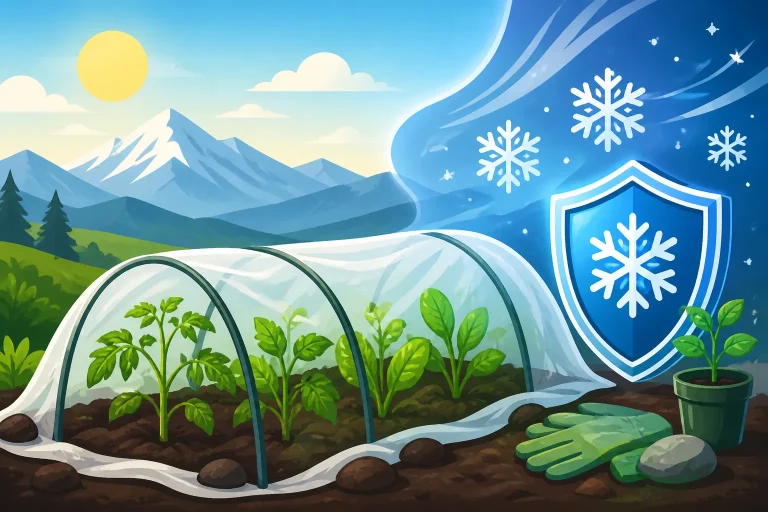
Decide whether protection is realistic. Row cover, a cold frame, or another form of season extension may reduce exposure, but protection takes planning and monitoring. Covers may need to be opened or adjusted as conditions change, and they do not make every tender crop safe in every cold event. Season Extension in Montana: Cold Frames, Hoops, and Cloches explains common options and their trade-offs.
-
Keep a brief record. Record the sowing or transplant date, the site, what the weather did, and how the crop responded. This will not make next year’s weather predictable, but it can show whether one garden bed consistently warms earlier or whether a crop has repeatedly struggled with a particular timing choice.
This approach helps avoid two common extremes: planting by an appealing date without checking conditions, and waiting for a supposedly perfect date that may not arrive. A range of dates and conditions is usually more useful than a single day circled on the calendar. For general outdoor timing, When to Plant Vegetables Outdoors Across Montana provides another planning reference.
Build a calendar around conditions, not a fixed date
A useful Montana planting calendar can still include dates. The key is to treat them as reminders or estimated windows, not orders that every garden must follow.
Set up a flexible season plan
Start by dividing the garden year into planning windows: early spring, the transition into warmer conditions, the main warm-season period, and fall harvest planning. The timing of each window will vary by site and year. A calendar can help you see the order of tasks without pretending that all of them have a fixed statewide date.
For each crop, note:
- Whether it is direct-sown or transplanted.
- How it handles cool conditions and frost.
- Whether it needs warm soil to germinate or establish.
- How much growing time it needs to produce a harvest.
- Whether you plan to protect it.
- What you will do if the weather delays planting.
This keeps the plan practical. If spring is cold and wet, you can postpone crops that need warmth while sowing or transplanting crops that suit cooler conditions, provided the bed is ready and the crop’s needs are met. If a cold snap threatens, protection or a delay may be safer than following the original date.
Use local observations to refine the plan
A garden notebook does not need to be elaborate. Track a few repeatable observations: when the soil is workable, which beds dry first, where frost lingers, and how crops respond to different planting windows. Over time, this can help you distinguish a general regional pattern from the quirks of your own yard.
Use the same observation points each season when possible. For example, compare a low bed with a sheltered bed, or note how long water remains after rain. Consistency makes the notes more useful than trying to remember whether one particular spring felt early or late.
Keep in mind that past garden performance is not a promise for the next year. A warm bed may still be hit by a cold event, and a crop that matured well once may struggle in a cooler summer. Records help with planning; they do not remove weather risk.
Choose crops with the season in mind
If the local growing window is short or unpredictable, cultivar choice becomes part of planting-time planning. Earlier-maturing options may offer a better chance of harvest, while a crop with a long maturity period may need indoor starting, protection, or a more favorable site. A label’s maturity estimate is a comparison tool, not a guaranteed number of days to harvest under every Montana condition.
If a crop regularly fails to finish before cold weather, shifting the sowing date may not be enough. The variety may need to change, or the crop may be better suited to a warmer microclimate or protected growing space. Choosing Short-Season Vegetable Varieties for Montana and How to Calculate Vegetable Days to Maturity in Montana can help make those choices more deliberate.
Common timing mistakes and how to avoid them
Treating a zone as a planting date
A zone label is easy to find, so it can seem like a complete answer. But it describes average winter minimum temperatures, not the last spring freeze, the temperature of the soil, or the number of warm days a crop will receive. Use it for winter survival questions and look elsewhere for planting timing.
Assuming the last spring freeze date is certain
A freeze date is an estimate based on observations, not a promise that frost will stop on that day. The date varies from year to year, and the risk may differ between a nearby station and a particular garden. A sensitive crop planted immediately after an average date can still be exposed to a later cold night.
For frost-sensitive crops, consider a margin of caution, current forecasts, and whether you can protect the plants. For crops that tolerate cooler conditions, the decision may be different. The goal is not to find a date that eliminates all risk; it is to understand the risk well enough to make a sensible choice.
Planting because the air feels warm
A few mild afternoons do not necessarily mean the soil is warm. They may also be followed by cold nights. Before sowing warm-season crops or moving out tender transplants, look at soil conditions and the expected weather, not just how the day feels.
Relying on a regional date without checking the garden
A regional planting guide cannot account for every slope, yard, or bed. If a recommended window seems early for your site, consider why: perhaps it sits in a low pocket, stays shaded, or holds moisture. If it seems late, check whether the bed is sheltered and genuinely ready rather than assuming that a warm corner makes every crop safe.
Regional guidance is valuable because it narrows the decision. Local observation helps finish it. For more on the role of local freeze patterns, see Matching Vegetable Planting Dates to Local Montana Frosts.
Starting seeds too early to get ahead
Indoor seed starting can extend the growing season, but starting earlier is not always better. If seedlings outgrow their containers or wait too long for suitable outdoor conditions, they can become difficult to handle and may transplant poorly. Match the indoor schedule to a realistic outdoor window and the crop’s growth rate.
If a cold spring delays planting, do not assume that a calendar plan must continue unchanged. Adjust care to the seedlings’ condition, and avoid rushing them into cold ground simply because the planned transplant date has arrived. Calculating Indoor Sowing Dates to Prevent Oversized Starts can help prevent this mismatch.
Forgetting that protection needs attention
A cover can help moderate conditions, but it is not a set-and-forget solution. Conditions beneath a cover can change, and plants may need ventilation or adjustment as temperatures rise. Covers also do not make every crop immune to severe cold, wind, or prolonged poor weather.
If protection is central to your plan, choose a method you can monitor. Consider what you will do on both cold nights and warm days, and be realistic about how much labor the setup requires. A simple planting delay may be the better option when protection would be unreliable.
Expecting a calendar to remove uncertainty
A planting calendar is a tool for organizing decisions, not a way to control the weather. A strong plan includes alternatives: a later planting window, a crop better suited to the conditions, or a way to protect vulnerable plants. Flexibility is not poor planning; it is part of planning for a variable climate.
Frequently Asked Questions
Can two gardens in the same hardiness zone have different planting dates?
Yes. Elevation, slope, cold-air movement, shade, wind exposure, soil moisture, and nearby structures can all affect conditions. A hardiness zone does not describe these site-level differences.
Does the last spring freeze date tell me when to plant every vegetable?
No. It is one planning clue, not a universal planting date. Different crops have different frost tolerance, soil-temperature needs, and maturity times. Seeds and transplants also face different establishment conditions.
Should I ignore my hardiness zone when planning a vegetable garden?
No. The zone can be useful for choosing perennial plants that need to survive winter. It is simply not enough to time annual vegetables. Use it alongside local freeze information, crop needs, soil conditions, and site observations.
Is a warm spell enough reason to plant warm-season crops?
Not by itself. Check the soil, the crop’s needs, and the forecast. A warm stretch can be followed by cold weather, and soil may stay cool even when daytime air temperatures rise.
What is the most useful first step if my garden keeps getting planting dates wrong?
Identify what is causing the mismatch. Note the garden’s location, cold spots, soil conditions, crop type, and weather around planting. Then compare those observations with local freeze information and revise the window rather than relying on a hardiness zone alone.
Disclaimer
This article is for general informational purposes only and does not constitute professional advice. Laws, prices and regulations vary by location and change over time. Consult a qualified professional for guidance on your specific situation. Montana Gardening Guide is not a government agency and is not affiliated with any university extension, state department of agriculture or other government agency.