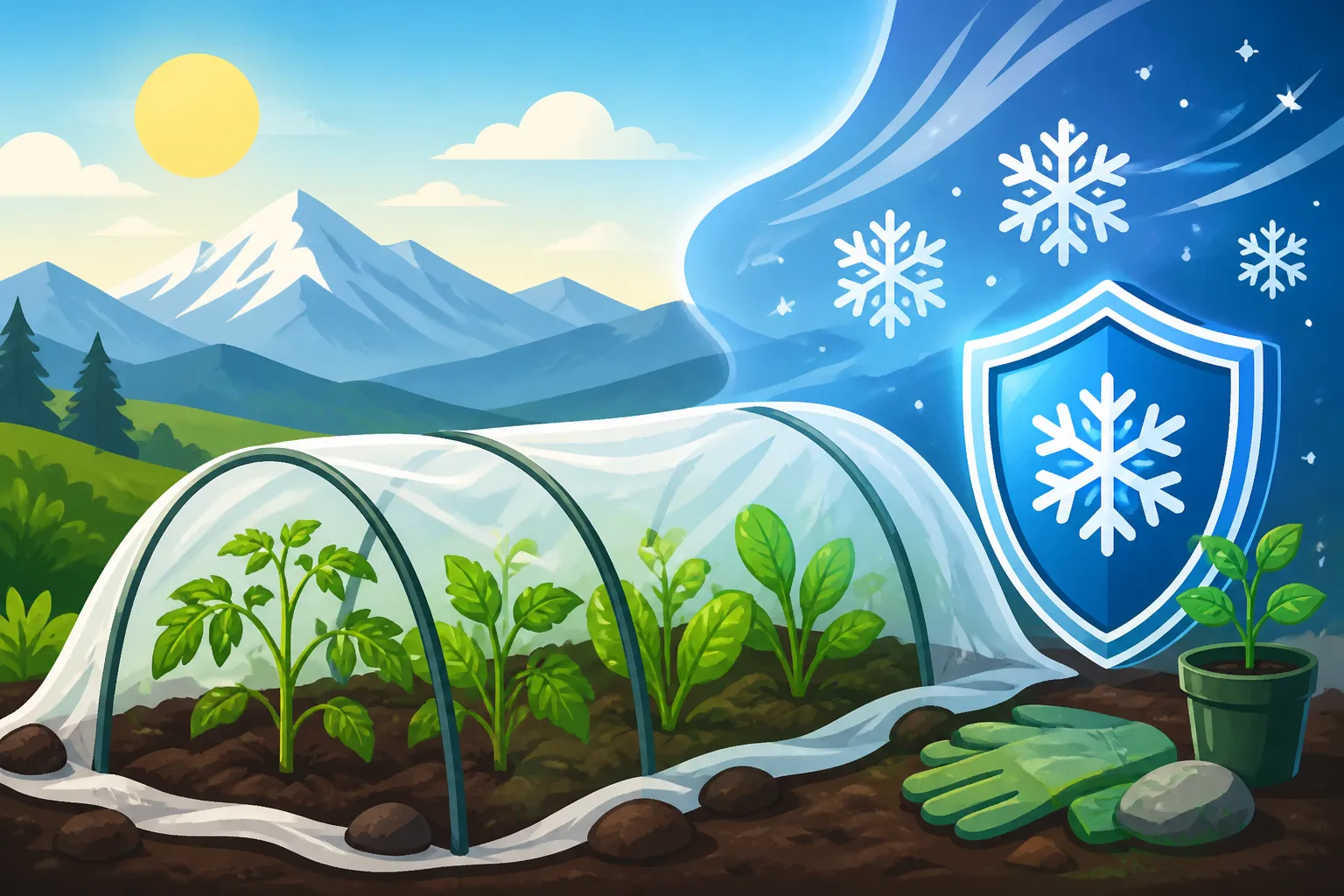
Protecting Montana Seedlings When Late Cold Threatens
A late cold snap can undo weeks of seed starting, especially when tender plants are already in the ground. In Montana, protection works best when you match the cover to the forecast, secure it before temperatures fall, and remove or vent it when conditions improve. Here’s how to judge the risk, shield seedlings, and check for damage without rushing to replace plants that may recover.
Judge the risk before choosing a cover
A forecast low is a useful warning, not a precise prediction for every garden bed. Cold settles differently across a yard: low spots and exposed areas may cool more than sheltered ground, while a wall, fence, or dense planting can provide some protection. Elevation, wind, cloud cover, and the garden’s soil and surroundings all matter.
A frost occurs when plant surfaces cool enough for ice to form, even if the reported air temperature is a little above freezing. A freeze means air temperatures reach freezing or below. Either can damage seedlings, but the likely effect depends on the crop, the plant’s stage, how long the cold lasts, and whether wind is present. A brief, calm cold night is not the same challenge as a prolonged freeze with strong wind.
Cool-season vegetables generally handle chilly conditions better than warm-season crops, but “cool-season” does not mean immune to frost. Newly transplanted seedlings are especially vulnerable because they have not yet established roots in the garden. Tender crops such as tomatoes, peppers, cucumbers, squash, pumpkins, and beans are more likely to suffer when exposed to late cold. Even if leaves survive, cold stress can slow growth and delay recovery.
Before deciding what to do, ask:
- What does the forecast actually show? Check the predicted low, wind, cloud cover, and how long temperatures may remain low. Look for updates during the day, since a changing forecast can alter the plan.
- Where are the seedlings? Raised beds, containers, open ground, and low-lying parts of the yard can experience different conditions. Small containers may cool quickly because there is less soil to buffer temperature changes.
- Which plants are exposed? Prioritize warm-season crops, recently transplanted starts, and seedlings in pots or exposed locations. A sturdy cool-season crop may need less protection than a tender crop beside it.
- How much warning do you have? A cover that can be placed securely before evening is more useful than an elaborate shelter assembled after temperatures have already fallen.
A hardiness zone does not tell you whether a vegetable seedling can safely go outside on a particular spring night. Zones describe typical winter minimums for perennial plants, not short-term frost risk or the cold tolerance of an annual crop. For that distinction, see Why Plant Hardiness Zones Do Not Tell You When to Plant. To understand local variation, use Finding Your Last Spring Freeze Date Across Montana Elevations alongside a current forecast; a typical freeze date is a probability, not a promise for your garden.
It also helps to compare planting plans with local conditions rather than relying on a single calendar date. Matching Vegetable Planting Dates to Local Montana Frosts and When to Plant Vegetables Outdoors Across Montana can help put a cold forecast in context. Neither replaces the forecast for the specific night ahead.
| Situation | Main concern | Practical first step |
|---|---|---|
| Tender crop in open ground | Leaves and growing points may be injured | Cover before evening with a supported, secured cover |
| Seedling in a small pot | The root ball can cool quickly | Group pots in a sheltered spot and cover or move them |
| Cool-season crop in a sheltered bed | Some leaf damage is possible, depending on the cold | Check the forecast and protect young transplants if the risk is meaningful |
| Strong wind with a cold forecast | Covers may lift, and exposed plants lose protection | Secure the cover along its edges and use a sturdy frame |
| Cold weather lasting beyond one night | A single cover may not be enough for repeated exposure | Plan for daily inspection, venting, and continued protection |
Prepare seedlings and supplies before the cold arrives
The easiest cold-protection plan is one you can put into action quickly. Keep clean row cover, fabric, hoops, clips, and weights where they are easy to reach. If you rely on an improvised cover, check ahead of time that it is large enough to reach the ground around the plants and that it will not collapse onto fragile stems.
For seedlings still in containers, arrange pots so they can be grouped or moved without disturbing their roots. A sheltered position near a building can reduce exposure, but do not assume that a protected corner is frost-free. Bring small pots into a suitable protected space if a cold night is expected, then return plants outdoors when conditions are appropriate. Avoid moving them into a hot indoor space and back outside repeatedly if a steadier sheltered location is available.
New transplants benefit from being well watered before a cold spell if their soil is dry. Moist soil can hold and release heat differently from very dry soil, but wet roots are not a useful form of protection. Do not saturate a bed or leave pots standing in water. Water the root zone rather than wetting leaves late in the day, and allow time for excess moisture to drain.
If seedlings have not yet been planted outdoors, delaying transplanting can be the simplest protection. Check the crop’s needs, the soil, and the forecast rather than transplanting just because a calendar date has arrived. Checking Soil Temperature Before Planting Out in Montana is useful for warm-season crops, which can struggle in cold soil even when daytime air feels pleasant.
Plants raised indoors also need a gradual transition to outdoor conditions. Hardening off helps seedlings adjust to sun, wind, and temperature changes; it does not make a tender crop frost-proof. If cold is approaching, pause the transition or bring plants back into a protected setting rather than leaving them exposed overnight. See Hardening and Transplanting Warm-Season Crops in Montana for how to prepare those crops for outdoor conditions.
Keep seed packets or crop notes available when making decisions. A packet can remind you of the crop’s intended planting conditions and help identify whether a seedling is a cold-tolerant crop or a tender one. For example, if your seed packet is from Botanical Interests, its crop-specific sowing information can be a useful reference alongside the forecast and your own garden observations.
Before the evening temperature drops:
- Check the latest forecast. Look for changes in expected low temperatures, wind, and the length of the cold period.
- Identify the most vulnerable plants. Focus first on tender crops, newly transplanted starts, and plants in small containers or exposed beds.
- Water dry soil early enough for it to drain. Avoid leaving leaves wet overnight or making already wet soil wetter.
- Set out the supports and covers. Make sure the materials are ready before dark, when it is harder to see stems and secure edges.
- Make a morning plan. Decide when you will inspect and uncover or vent the plants if the day warms up.
A little preparation also helps avoid common last-minute mistakes. Have enough cover material to reach the ground around the plants, and make sure weights or clips will hold it in wind. If a cover is too small to enclose the bed, prioritize the most vulnerable plants rather than leaving a loose piece that can blow away.
Choose and install a cover that fits the situation
A cover works by reducing heat loss and shielding plants from direct exposure to cold air and wind. It is not a heat source. Its effectiveness depends on the material, how well it is secured, how much warmth the soil can release, and how cold and windy the night becomes. No cover guarantees that seedlings will be unharmed during a severe or prolonged freeze.
Row cover and frost cloth
Lightweight garden row cover or frost cloth is a practical choice for a bed of seedlings. Lay it over hoops when possible so the material does not press heavily on tender leaves. If the cloth must rest on the plants, use a light material and avoid putting pressure on fragile stems or growing tips. Anchor the edges at the ground with clips, boards, or other secure weights so cold air and wind are less likely to get underneath.
A row cover can be useful for a short cold spell, but inspect it after installation. Wind can pull a loose edge free, and a sagging cover can bruise or break young growth. If the forecast includes strong wind, strengthen the frame and check that the material stays in place. Do not assume that adding multiple loose layers will solve every problem; a secure, well-fitted cover is more dependable than a pile of fabric that can shift.
Blankets and other improvised fabric
A clean blanket or sheet can provide temporary protection if it is supported and secured. Keep heavy material off delicate seedlings by using hoops, stakes, or a frame. Check that it reaches the ground around the bed and that it will not blow onto neighboring plants.
Avoid using a heavy covering that can crush plants or hold excessive moisture against them. Remove or open improvised covers when the cold risk has passed and daytime conditions warm. A material that protects overnight can become a problem if it remains over the plants in bright sun.
Plastic sheeting
Plastic can block wind and rain, but it should not rest directly on foliage. Contact points can become very cold, and plastic can heat up quickly in sunlight. Use a frame to keep it above the leaves, secure it against wind, and open or remove it when temperatures rise. If you cannot check the bed in the morning, breathable fabric is often easier to manage for an overnight cold event.
A cold frame or low tunnel can provide a more structured shelter, especially when cold weather lasts for several days. These structures still need attention: sunlight can warm them substantially during the day, so ventilation matters. Season Extension in Montana: Cold Frames, Hoops, and Cloches explains how different shelters fit into a longer season-extension plan.
Covers for containers
Pots are easier to move than in-ground plants, which is a real advantage during an unexpected cold snap. Group containers together in a sheltered location, then cover them if needed. If you move pots against a wall or under an overhang, make sure the area still has adequate light and is not exposed to strong wind or other hazards. Do not put pots directly on a heat source.
Large containers may hold more warmth than small pots, but size alone is not a guarantee. A small seedling in a small pot can still be vulnerable even when its leaves appear healthy during the day. Check the root ball and soil after the cold event rather than judging only by the top growth.
If you are covering a full bed, How to Cover Garden Starts During Sudden Spring Freezes offers additional guidance on placing covers over young plants. The same basic priorities apply: support the material where needed, secure the edges, and check the shelter again after weather changes.
Protect seedlings during the cold night and the following day
Place covers before the coldest part of the night, preferably while there is still daylight to work safely. Spread the material over the supports, then secure the edges so the cover reaches close to the ground. If a cover is only draped loosely over the plants, wind can lift it and allow cold air to move underneath.
A cover should protect the plants without trapping them in an airtight, overheated space the next day. In the morning, check the outdoor conditions and the shelter. If temperatures have risen and the sun is warming the bed, vent or remove the cover. A cold frame or plastic-covered tunnel may need ventilation earlier than breathable fabric because it can heat up quickly. If cold conditions continue, keep protection in place as needed but inspect the plants and structure regularly.
Do not uncover just because the sky is bright if the air is still cold or the forecast warns of another drop. Likewise, do not leave plastic sealed over the plants through a warm, sunny day. Use the temperature and conditions at the garden, not a fixed clock time, to decide whether to open the cover.
If the cold is expected to continue for more than one night, plan for a repeated routine. Check the forecast, secure covers each evening, and inspect them after wind. During the day, vent shelters that warm in sunlight. For plants in pots, move them to a protected place if that is easier than repeatedly covering them outdoors.
A cover can reduce stress, but it cannot correct poor planting timing or make a tender crop behave like a frost-hardy one. If the forecast is especially concerning and seedlings are still in containers, moving them to a protected space may be more reliable than leaving them in a bed under a single layer of fabric. When plants are already outdoors, use the best available shelter and accept that some leaf damage may still occur.
The morning after a cold night, wait until the foliage has thawed before handling it. Frozen or chilled leaves are brittle and can be damaged by brushing, bending, or pruning. Once the plant has warmed, look for discoloration, soft or water-soaked patches, limp leaves, and damage to stems or growing points. Affected leaves may not recover, but the whole seedling may still be alive.
Avoid removing every damaged leaf immediately. Some injured tissue may remain functional, and cutting into a stressed plant can create additional wounds. Give the seedling time to show which parts are still growing. If the main stem and growing point remain sound, the plant may produce new leaves, though recovery can take time.
Assess damage and help plants recover
Cold injury does not always become obvious at sunrise. Some leaves may look fine at first and deteriorate later as damaged tissue dries or softens. Check again after the plant has been in normal daylight and warmth. Compare the affected seedling with nearby plants that were less exposed, and consider whether the damage is limited to leaf tips or has reached the stem and growing point.
For plants with mild damage, leave them in place, maintain appropriate moisture, and avoid unnecessary disturbance. Do not compensate for cold stress with extra fertilizer or heavy watering. These actions cannot reverse injured tissue and may create additional stress. Resume ordinary care based on the crop and the condition of the soil.
If the growing point is badly damaged, the seedling may not continue normally. A warm-season crop with a badly injured stem may be worth replacing if there is enough growing season left; a partly damaged plant may still recover. Make that choice after you can see whether new growth is developing, rather than discarding every plant with a wilted leaf immediately.
For a bed with uneven damage, protect surviving seedlings from any further cold forecast. A second cold night can add injury to plants that were already stressed. Re-cover them as needed, and continue to monitor the forecast and the condition of the bed.
Keep notes about where damage occurred and which cover was used. If plants in one low corner were hit harder than those beside a wall, that information can help you adjust future planting locations and protection plans. You might also note whether pots, raised beds, or in-ground rows were affected differently. Small observations from your own yard can be more useful than treating every part of a Montana garden as if it had the same exposure.
Replacing plants may be necessary when stems are mushy, the growing point is dead, or no healthy growth resumes. Before replanting, check the next forecast and the soil conditions. If another cold spell is likely, wait or keep replacements protected. For a longer-term plan, Protecting Montana Vegetable Beds From Hail and Heavy Wind covers other weather risks that can damage young crops after transplanting.
The best strategy is a combination of timing, observation, and practical protection: plant with local conditions in mind, keep suitable materials ready, cover vulnerable seedlings securely, and give injured plants time to show whether they can recover. No single date or piece of fabric eliminates cold risk, but a prepared gardener can often prevent a brief cold snap from becoming a complete crop loss.
Frequently Asked Questions
Should I cover seedlings whenever the forecast is near freezing?
Not necessarily. Consider the crop, how recently it was transplanted, the location of the bed, wind, and how long cold conditions may last. Tender crops and seedlings in exposed spots deserve more attention than established, cold-tolerant plants. When the risk is unclear, a secure temporary cover is a reasonable precaution, provided you can vent or remove it when conditions warm.
Can I use a sheet or blanket to protect garden seedlings?
Yes, as a temporary cover, if it is clean, supported where needed, and secured so wind cannot lift it. Keep heavy fabric from crushing seedlings. Remove or open it when daytime conditions warm, and check that it has not shifted onto the plants.
Will a row cover protect seedlings through a hard freeze?
A row cover can reduce exposure, but it is not a guarantee against a severe or prolonged freeze. Protection depends on the cover, how it is installed, the weather, and the bed’s conditions. Use extra caution with tender crops and consider moving container seedlings to a protected location when possible.
Should I cut off cold-damaged leaves right away?
Wait until the foliage has thawed and you can assess the damage. Do not prune solely because leaves look limp immediately after a cold night. Give the plant time to show whether stems and growing points are still alive, then remove tissue only if it is clearly dead or decaying.
Disclaimer
This article is for general informational purposes only and does not constitute professional advice. Laws, prices and regulations vary by location and change over time. Consult a qualified professional for guidance on your specific situation. Montana Gardening Guide is not a government agency and is not affiliated with any university extension, state department of agriculture or other government agency.