When to Plant Vegetables Outdoors Across Montana
Choosing an outdoor planting date in Montana is difficult because a calendar date can be right for one garden and risky for another. Elevation, exposure, soil warmth, crop type, and the forecast all matter. A useful planting plan is a set of local windows, not a statewide schedule, with room to adjust when spring arrives early or cold lingers.
Why one statewide planting date does not work
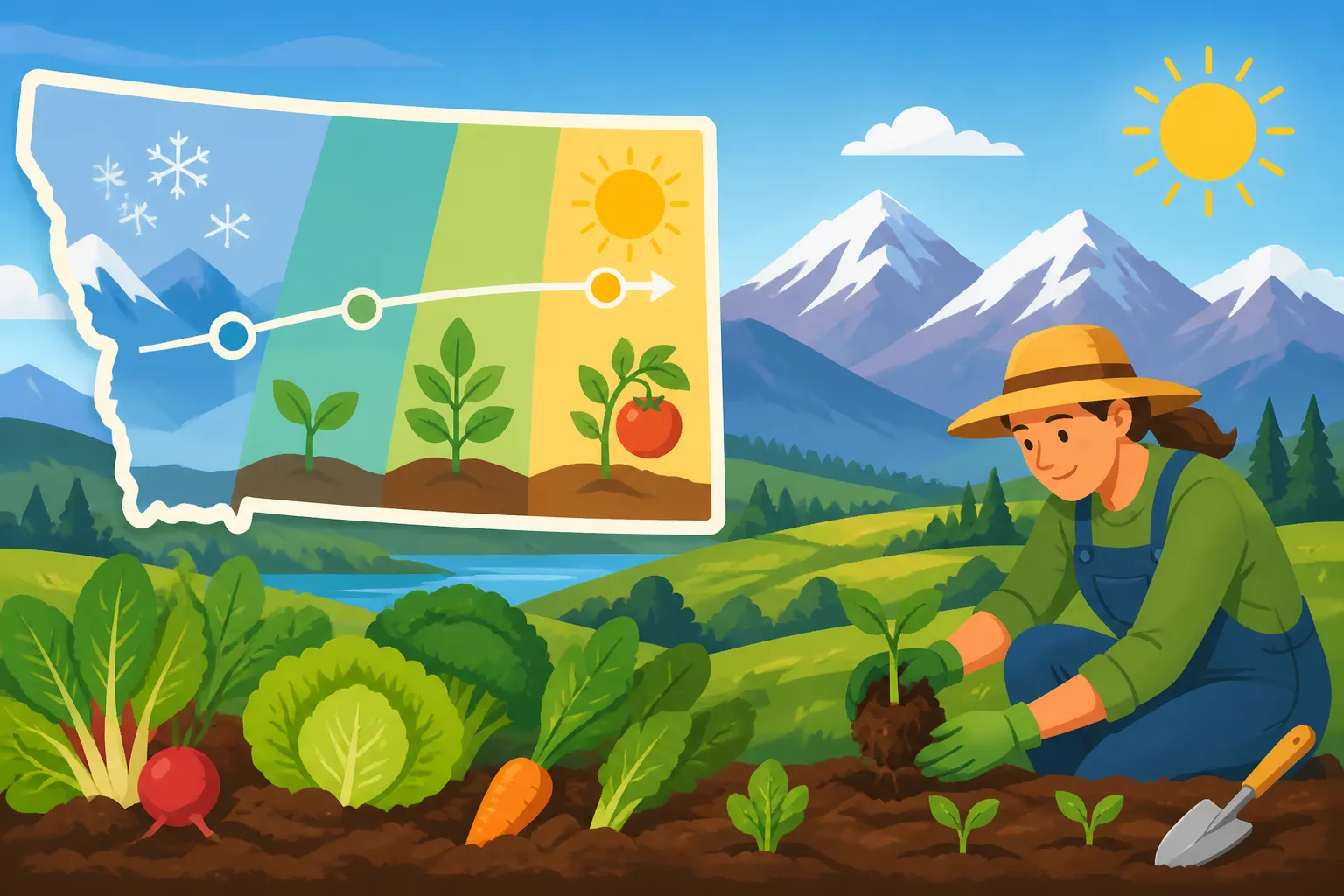
Montana gardens do not share a single spring. A sheltered plot in a mild valley may warm sooner than an exposed garden at higher elevation, while wind, shade, drainage, and the shape of the land can create different conditions within the same community. Even neighboring yards can diverge: a sunny bed beside a building may warm before an open, low-lying patch where cold air settles.
That variation makes a statewide calendar date a poor substitute for checking your own site. A date can still be useful as a reminder to start watching conditions, but it cannot guarantee that soil is ready or that a vulnerable crop will escape a cold night. A planting plan works better when it combines local frost information with what is happening in the garden.
Montana State University Extension describes the goal as: Calculate the specific time to plant seeds or start transplants. That means using local conditions and crop needs rather than treating a broad regional calendar as a command to plant.
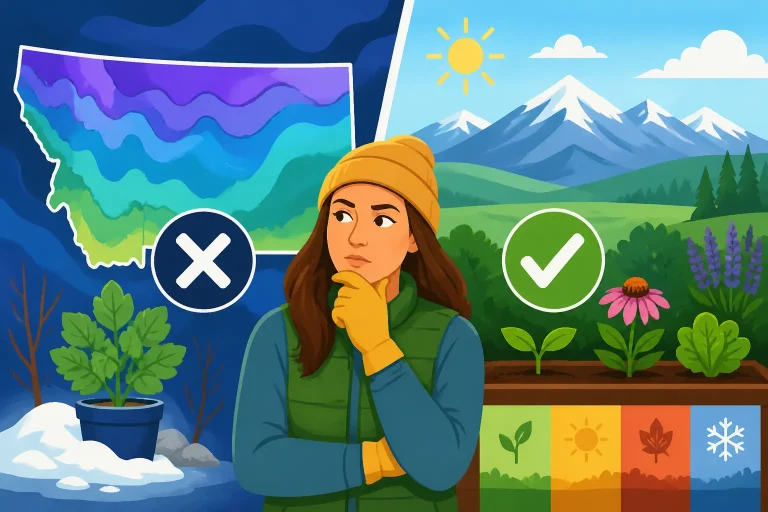
Hardiness zones do not answer the outdoor planting question by themselves. They describe average annual extreme winter temperatures, which helps with choices about perennial plant survival. They do not tell you when spring soil is warm enough, whether a late freeze is likely, or how much growing time a vegetable has to mature. For that distinction, see Why Plant Hardiness Zones Do Not Tell You When to Plant.
A practical calendar should account for several factors:
- Your garden’s location and exposure. Elevation, slope, nearby buildings, wind exposure, shade, and cold-air pooling can all affect conditions.
- The crop’s tolerance. Some vegetables cope with cool weather better than others. Tender crops can be damaged by cold that a hardy crop may tolerate.
- The planting method. Seeds sown outdoors depend on suitable soil conditions and time to grow. Transplants have already developed indoors, but still need to adjust to outdoor weather.
- Soil condition. Cold, saturated, or compacted soil can make planting difficult even when the air feels mild.
- The forecast. A stretch of pleasant weather does not rule out a later cold snap. Watch for changing conditions rather than relying on one warm afternoon.
Think of the calendar as a way to organize decisions, not a promise that every bed will be ready at once. You may be able to sow a hardy crop in one part of the garden while holding tender transplants elsewhere. Keeping those decisions separate is often easier than trying to find one date that suits everything.
Build a planting window from local conditions
A planting window is more useful than a single day because it leaves room for normal variation in weather and garden readiness. To build one, start with local freeze information, then compare it with the crop’s tolerance and your site’s conditions. A freeze date is not a guarantee; weather varies from year to year. Use it as context, and keep checking forecasts as planting approaches.
Find information that is relevant to your area rather than relying on a broad state average. A nearby weather station can be a helpful starting point, but it may not reflect a garden at a different elevation or in a different landscape position. The garden itself provides additional clues. A low spot, a wind-exposed bed, or a shaded patch may stay colder or wetter than a sheltered, sunny place nearby.
For help identifying local spring freeze information, see Finding Your Last Spring Freeze Date Across Montana Elevations. Use that information to plan a cautious window, not to assume that cold weather cannot occur after the listed date. A forecast can change, and local conditions can differ from the station’s.
Before planting, check what is happening in the bed:
- Is the soil workable, or does it stick heavily to tools and compress underfoot?
- Does the bed drain, or is water still sitting on the surface?
- Is the soil warming, or does it remain cold through the part of the day when you can check it?
- Is the planting area exposed to wind or likely to collect cold air?
- Can you protect new seedlings or transplants if the forecast shifts?
These observations will not replace local climate information, but they help you avoid treating the garden as if it were identical to a weather station. A bed that is wet and cold may need more time even when a nearby garden looks ready.
Keep a simple record of what you observe. Note when a bed becomes workable, when seedlings emerge, and whether a cold spell causes damage. Over time, those observations can help you identify which parts of your property tend to warm early and which need a more cautious schedule. Records are especially useful when a garden has several distinct exposures, because a single note about the whole property can hide important differences.
Do not let a warm spell push you into planting everything at once. If conditions are favorable for a hardy crop but still uncertain for a tender one, plant the hardy crop and wait on the tender crop. That approach gives you something to do without forcing every vegetable into the same risk window.
Decide whether to sow outdoors or use transplants
Outdoor planting includes both direct sowing and moving transplants into the garden. The right choice depends on the crop, how it responds to disturbance, how quickly outdoor conditions become suitable, and how much growing time is available. A calendar should distinguish these methods instead of treating every vegetable as a seed that goes straight into a bed.
Direct sowing avoids the adjustment involved in transplanting. It can be a good fit for crops that are commonly planted where they will grow, especially when their roots are easily disturbed or when the garden has suitable conditions for germination. But seeds outdoors are exposed to changing soil moisture, temperature, and weather. They also need time to emerge and establish before they can compete with weeds or withstand stress.
Transplants can give crops a head start, but they are not automatically safer. A plant raised indoors has to adapt to stronger light, wind, and cooler outdoor conditions. Moving it out too abruptly can cause stress, and planting before the weather is suitable can set it back. A well-grown transplant still needs a suitable outdoor window.
When deciding between the two methods, consider:
- The crop’s response to transplanting. Some crops handle moving more readily than others. If a crop is sensitive to root disturbance, direct sowing may be preferable.
- The time available outdoors. A crop that needs a long growing period may benefit from starting indoors, while a crop that grows quickly in suitable outdoor conditions may not need that head start.
- The soil’s readiness. A transplant can go into a bed that is workable, but a seed still needs conditions suitable for germination and early growth.
- Your ability to protect the planting. Covers may reduce exposure to a brief cold spell, but they do not turn every crop or every weather situation into a safe planting opportunity.
- The quality of the start. A healthy, compact transplant is generally easier to manage than one that has become weak or overgrown indoors.
For a closer look at the trade-offs, see Timing Garden Direct Sowing vs Indoor Starts for Montana Climates. If you are starting plants indoors, Montana Seed-Starting and Transplant Schedules by Region can help connect indoor timing with the eventual outdoor window. The key is to plan backward from conditions the plant can handle outside, rather than starting seeds early simply because the calendar says spring is approaching.
Before transplanting, allow seedlings to adjust gradually to outdoor conditions. Bring them into brighter light and exposure in a planned way rather than moving tender indoor-grown plants straight into sun and wind. The details depend on the crop and conditions, so follow crop-specific guidance and observe how the plants respond. If they look stressed, pause and give them time to recover before increasing exposure.
A transplant date is not the date the seed was sown indoors, and it is not necessarily the date the plant first goes outside for adjustment. Keeping those milestones separate makes a calendar easier to use. You can record when to begin indoor sowing, when to start acclimating plants, and when conditions are suitable for planting them in the bed.
Direct sowing also needs a crop-specific approach. Seeds differ in their preferred conditions, and soil that is suitable for one crop may be too cold or wet for another. Check the seed packet or reliable crop guidance for germination and planting needs. The aim is not to force all seeds into the first workable bed, but to sow each crop when its likely conditions support steady emergence.
Match planting decisions to the crop
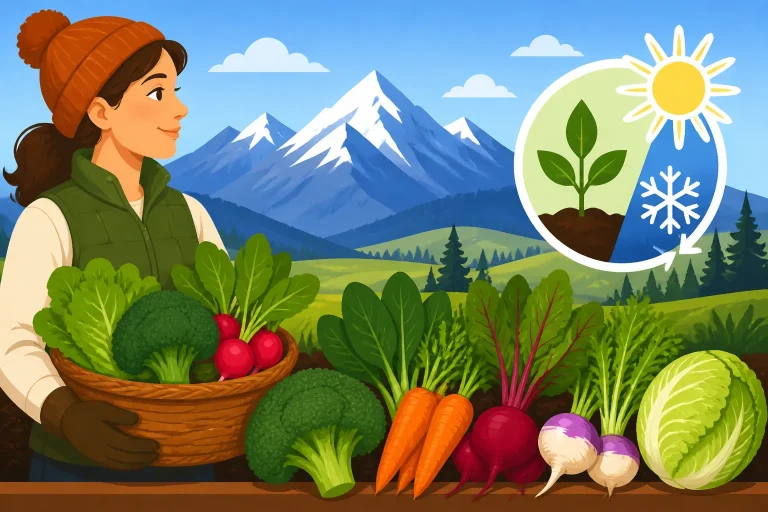
A useful calendar groups vegetables by how they respond to cool conditions rather than arranging all crops under a single “planting day.” Hardy and cool-season vegetables can generally be considered earlier than tender, warm-season crops, but even that broad distinction is not a fixed date. Crop tolerance is only part of the decision; soil condition, site exposure, and the forecast still matter.
| Crop group | What to assess before planting outdoors | Common planning approach |
|---|---|---|
| Hardy or cool-season crops | Whether the bed is workable, drains adequately, and has conditions suitable for the crop’s seed or transplant | Consider an earlier planting window, while watching for cold snaps and overly wet soil |
| Crops usually sown directly | Whether soil conditions support germination and whether the crop can establish in place | Sow when the bed and forecast are suitable; avoid assuming that a mild afternoon means soil is ready |
| Warm-season crops | Whether the soil and expected weather are warm enough for the crop, and whether cold nights remain a concern | Wait for more settled warmth or use a protected approach suited to the crop |
| Indoor-started transplants | Whether plants are healthy and acclimated, and whether the destination bed is ready | Move them outdoors gradually, then transplant when conditions are suitable |
These are planning categories, not guarantees. Vegetables within a broad group can still have different needs, and variety choice affects how a crop performs within a short or variable season. For short-season choices, see Choosing Short-Season Vegetable Varieties for Montana.
Cool-season crops are often the first vegetables gardeners consider, but “cool-season” does not mean unaffected by weather. Seed may fail to emerge well in cold or waterlogged soil, and young plants can still be vulnerable to severe conditions. Check the crop’s growing needs and the state of the bed. If soil is wet enough to smear or compact, delaying work may protect its structure as well as the planting.
Warm-season vegetables need more caution because they are sensitive to cold and generally depend on warmer soil and weather. Planting them into a bed that has not warmed can stall growth, even if the plants survive. A transplant may look ready in its container while the garden is not ready for it. Waiting for sustained favorable conditions can be more effective than trying to gain time by putting a tender crop out early.
Some vegetables can be planted in succession, meaning that sowings are spaced over the season to spread harvests. Succession planting is not a reason to ignore conditions. Each sowing still needs a suitable window, and later plantings may face different challenges from early ones, such as heat or a shorter period for growth before fall cold. For planning those later crops, see Managing Short-Season Crop Rotations and Fall Harvest Windows.
Use crop-specific guidance for details that a broad calendar cannot supply. Seed packets can provide instructions for sowing depth, spacing, and germination needs, while reliable growing guides can help with transplanting and harvest expectations. Those instructions should be interpreted alongside local conditions; a generic planting calendar cannot account for the exact soil and exposure in your garden.
Turn the calendar into a flexible plan
A dependable planting calendar has room for observation and adjustment. Start by listing the vegetables you intend to grow and identifying whether each will be direct-sown or transplanted. Then note the conditions each crop needs and the kind of cold risk it can tolerate. This gives you a working plan without pretending that a particular day will suit every planting.
Organize the garden into areas if conditions differ across the property. A protected bed near a structure may be ready before an exposed bed, while a shaded or low spot may remain cold and damp. You can plan to plant the most ready area first, then reassess the others rather than waiting for the entire garden to match.
A calendar can include several kinds of reminders:
- Check local freeze information and keep an eye on the forecast.
- Assess bed drainage, soil workability, and warmth before sowing or transplanting.
- Separate direct-sowing decisions from transplanting decisions.
- Note which crops are more vulnerable to cold.
- Recheck conditions after a cold spell or a major change in weather.
- Record what happened so next season’s plan reflects your garden, not just a general calendar.
These reminders are more useful when paired with a decision rule. For example, do not plant a tender crop merely because a calendar window has opened if the bed is cold or the forecast raises concern. Likewise, do not delay a suitable hardy crop simply because a warm-season crop is not ready. Make the decision crop by crop and bed by bed.
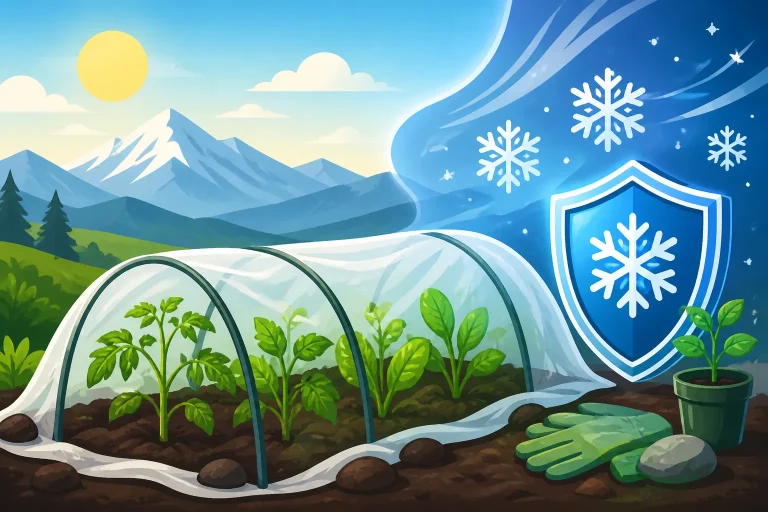
Protection can make a planting window more manageable, but it has limits. Row cover, cloches, cold frames, or low tunnels can buffer conditions when they are appropriate for the crop and weather. They also require attention: covers can trap heat, restrict airflow, or be affected by wind and precipitation. Choose a method that fits the bed and be ready to adjust it. See Season Extension in Montana: Cold Frames, Hoops, and Cloches for options, and Protecting Montana Seedlings When Late Cold Threatens for planning around sudden cold.
Protection should not be treated as a substitute for checking conditions. A cover may reduce exposure, but it cannot guarantee that every seedling will be unharmed during a severe or prolonged cold event. If a planting is valuable or especially vulnerable, consider whether waiting is the lower-risk choice.
Soil temperature is another useful part of the decision, especially for crops that need warmth. Air temperature can rise while the soil remains cool, so a sunny afternoon alone may give a misleading impression. If you use a soil thermometer, take readings in the bed where you intend to plant and compare them with the crop’s requirements. For more on this check, see Checking Soil Temperature Before Planting Out in Montana.
Finally, treat the planting calendar as a record that gets better with use. If a crop struggles after an early planting, note the soil condition, weather, and location. If one bed becomes ready sooner than another, record that difference. These observations help refine future windows without turning one season’s outcome into a rule for every year.
The most reliable outdoor schedule is therefore not a rigid list of dates. It is a set of crop-specific decisions based on local freeze information, garden conditions, and the weather ahead. That approach makes it easier to plant suitable crops when their window opens, hold tender plants when risk remains, and adapt when Montana’s spring does not follow a predictable pattern.
Frequently Asked Questions
Can I use one planting date for the whole state?
A single date is unlikely to suit every garden. Local elevation, exposure, drainage, soil condition, and crop tolerance can all change when a bed is ready. Use local information and assess each garden area rather than treating a statewide date as a guarantee.
Should I plant as soon as the last spring freeze date passes?
Not automatically. Freeze information describes a probability, not a promise that cold cannot return. Check the forecast, the crop’s cold tolerance, and the condition of the soil before planting.
Are hardiness zones useful for planning vegetable planting?
They can help with perennial plant choices, but they do not tell you when to sow annual vegetables or move transplants outdoors. Soil warmth, frost risk, and crop requirements are more useful for those decisions.
Is direct sowing safer than transplanting?
Neither method is always safer. Direct-sown seeds face outdoor conditions from the start, while transplants need to adjust to outdoor exposure and can be damaged by unsuitable weather. Choose the method that fits the crop and the conditions.
Sources
- Montana State University Extension — Can I Grow That Here? Vegetable Seed and Transplant Schedules for Garden or Container – Extension Store (checked November 15, 2026)
Disclaimer
This article is for general informational purposes only and does not constitute professional advice. Laws, prices and regulations vary by location and change over time. Consult a qualified professional for guidance on your specific situation. Montana Gardening Guide is not a government agency and is not affiliated with any university extension, state department of agriculture or other government agency.